+44
2039 362224
+44
2039 362224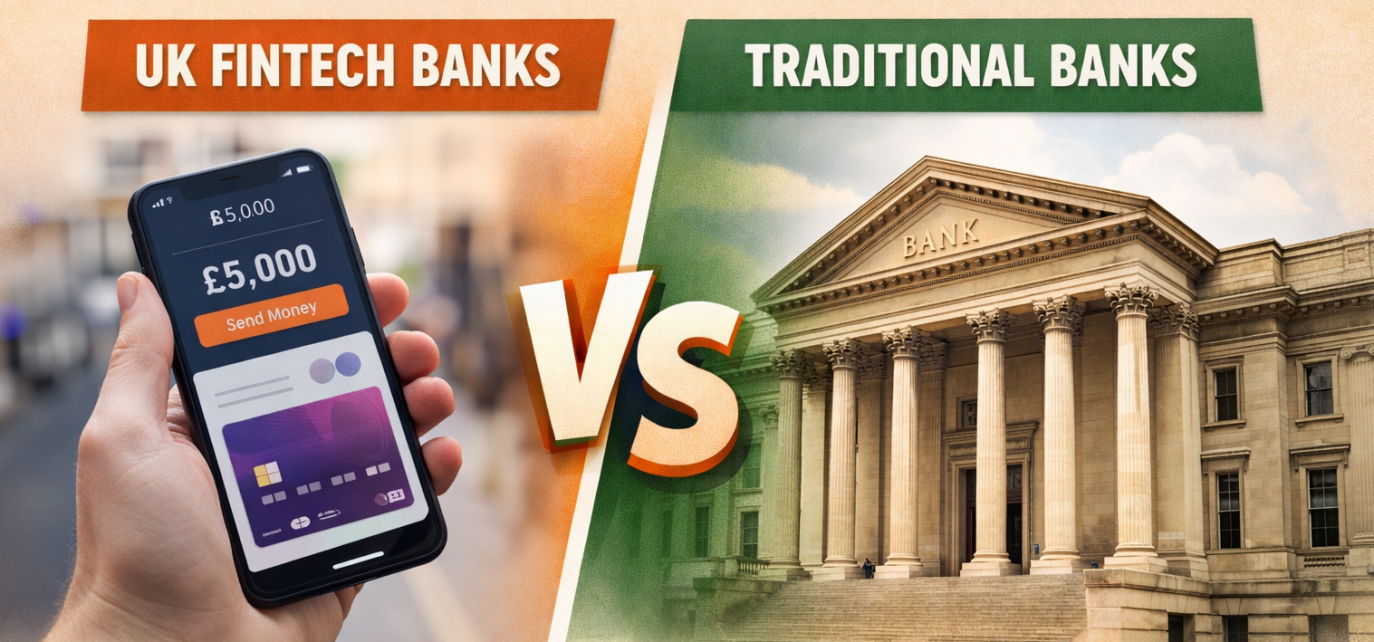
For non-resident founders forming a UK company, choosing between UK fintech banks and traditional banks is one of the most important decisions in the entire setup process.
Many entrepreneurs assume fintech banks are always easy to open and traditional banks are nearly impossible. In reality, the 2026 UK banking landscape is more balanced—but also more compliance-driven.
Read the blog to learn about the main differences between fintech and traditional UK banks for non-UK residents, the approval process, and how to choose the right option to avoid unnecessary rejections.
The Reality: Company Formation ≠ Bank Approval
One of the biggest misconceptions among non-residents is assuming that once a UK company is registered, a bank account is guaranteed.
In reality:
Companies House approves your company's registration
Banks independently assess financial and compliance risk
Approval from one does not influence the other
This applies equally to fintech and traditional banks.
Please watch the video given below to learn more:
What Are UK Fintech Banks?
UK fintech banks are digital-first financial platforms designed for fast onboarding and global accessibility.
For non-residents, they provide:
Complete remote account opening
Faster application processing
User-friendly mobile and web platforms
Easier initial access for overseas founders
However, fintech banks are still regulated financial institutions and apply strict compliance checks.
What Are Traditional UK Banks?
Traditional UK banks are established high-street financial institutions with long-standing regulatory frameworks.
For non-residents, they usually involve:
Detailed documentation requirements
Longer onboarding timelines
Stronger compliance and risk checks
In some cases, physical verification requirements
These banks prioritize long-term stability and lower-risk customers.
UK Fintech Banks vs Traditional Banks (2026 Comparison)
How Fintech Banks Evaluate Non-Residents
Fintech banks focus heavily on the following:
Proof of address quality
Clarity of business activity
Expected transaction behaviour
Industry risk classification
Most rejections occur due to:
Weak or unclear documentation
Vague business descriptions
Inconsistent application details
Fintech banks are faster—but not lenient.
How Traditional Banks Evaluate Non-Residents
Traditional banks apply deeper due diligence, including:
Source of funds verification
Business sustainability checks
Director residency risk assessment
Long-term financial stability
They generally prefer:
Established businesses
Predictable transaction patterns
Strong UK business presence
It makes approval more challenging for early-stage non-resident founders.
Which Option Is Better in 2026?
There is no universal best choice. It depends on your business stage and profile.
Fintech Banks Are Better If You:
Are you a new non-resident founder
Operate an online or service-based company
Have fast GBP or multi-currency access
Can maintain a transparent transaction record
Are you a new non-resident founder
Operate an online or service-based company
Have fast GBP or multi-currency access
Can maintain a transparent transaction record
Traditional Banks Are Better If You:
Have an established business history
Expect higher transaction volumes
Require lending or advanced banking services
Can meet strict compliance requirements
Have an established business history
Expect higher transaction volumes
Require lending or advanced banking services
Can meet strict compliance requirements
Common Mistakes Non-Residents Make
Avoid these mistakes:
❌ Applying to multiple banks at once
❌ Choosing traditional banks too early
❌ Submitting weak proof of address
❌ Using inconsistent business descriptions
❌ Expecting instant approvals
Smarter Banking Strategy for Non-Residents (2026)
A more effective approach is the following:
✔ Start with a fintech bank suitable for non-residents
✔ Build consistent and clean transaction history
✔ Maintain strong compliance documentation
✔ Transition to traditional banks when ready
This staged approach improves long-term approval success.
Is One Option Safer Than the Other?
Both fintech and traditional banks are
Fully regulated
Subject to UK financial laws
Monitored for compliance and risk
The real risk is not the bank type—it is
Poor preparation
Inconsistent financial activity
Misaligned expectations
A well-prepared founder can succeed with either option.
Final Takeaway
The UK fintech banks vs traditional banks for non-residents comparison is not about easy vs hard.
It is about:
Business maturity
Compliance readiness
Documentation strength
Long-term banking goals
Non-residents who choose based on strategy—not assumptions—achieve far higher approval success and long-term banking stability.
Click to get in touch with us to receive a customized quote.
#ukfintechbanks #uktraditionalbanks #nonresidentbankinguk #ukbusinessbankaccount #fintechvstraditionalbanks #ukcompanybanking #overseasfoundersuk #ukbankaccountnonresident #ukbusinesssetup2026 #internationalfoundersuk #ukbankingguide #businessbankinguk #ukstartupbanking